
When Sinus Pressure Becomes a Sinus Infection
Publised on
June 25, 2026
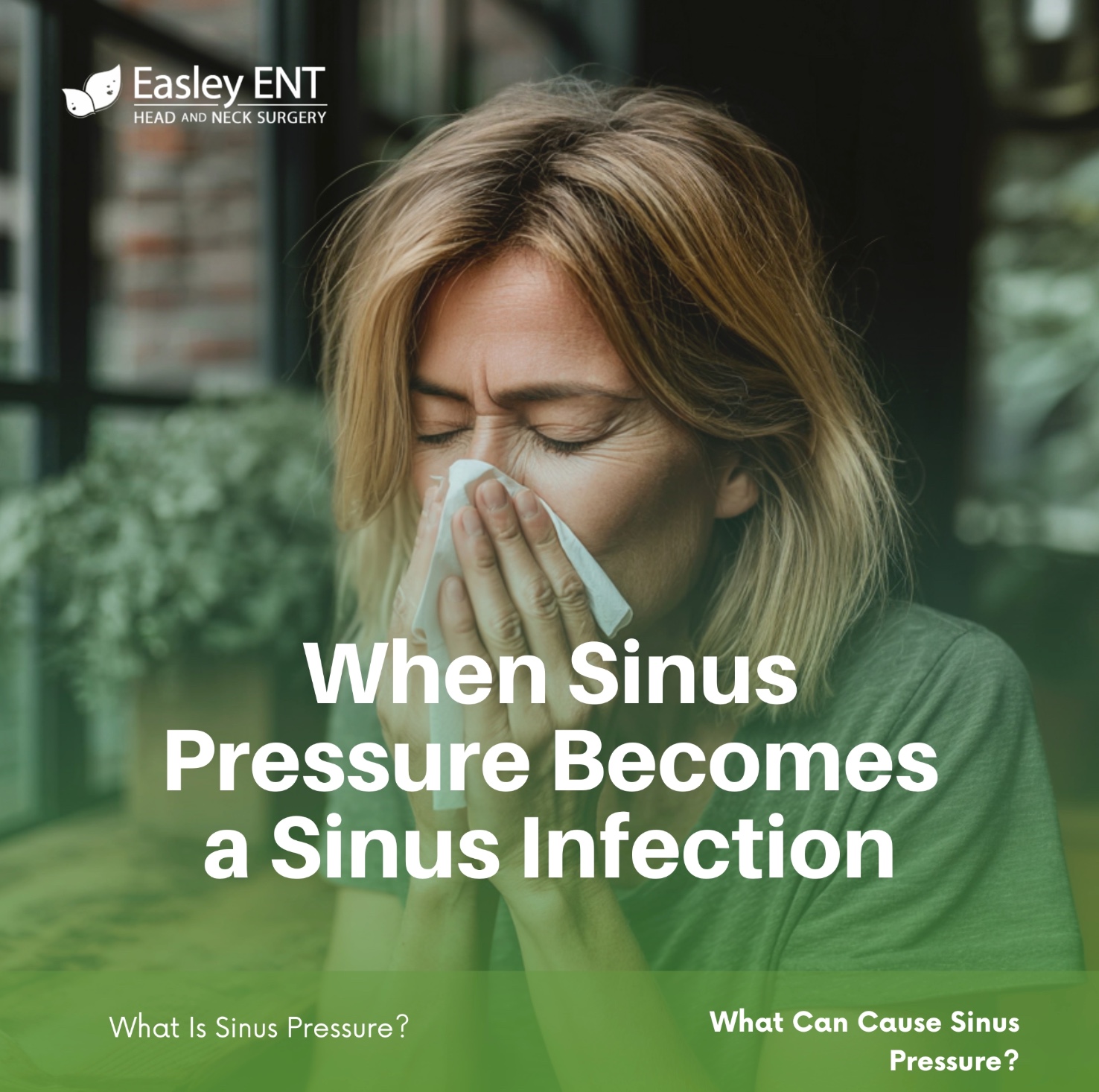
When Sinus Pressure Becomes a Sinus Infection
Congested nose. Difficulty breathing. Headaches. Runny nose. Facial tenderness and pressure that seem to worsen when you bend over or move your head. If you find yourself dealing with these symptoms, your mind might go straight to a sinus infection. However, sinus pressure is not always a sign of sinusitis, and not all cases of sinusitis are caused by infection.
An ENT doctor in Easley, SC, can help assess your symptoms and determine if your sinus pressure is connected to a possible case of sinusitis.
Let’s go over the basics of sinus pressure and sinusitis, and when sinus pressure becomes a sinus infection.
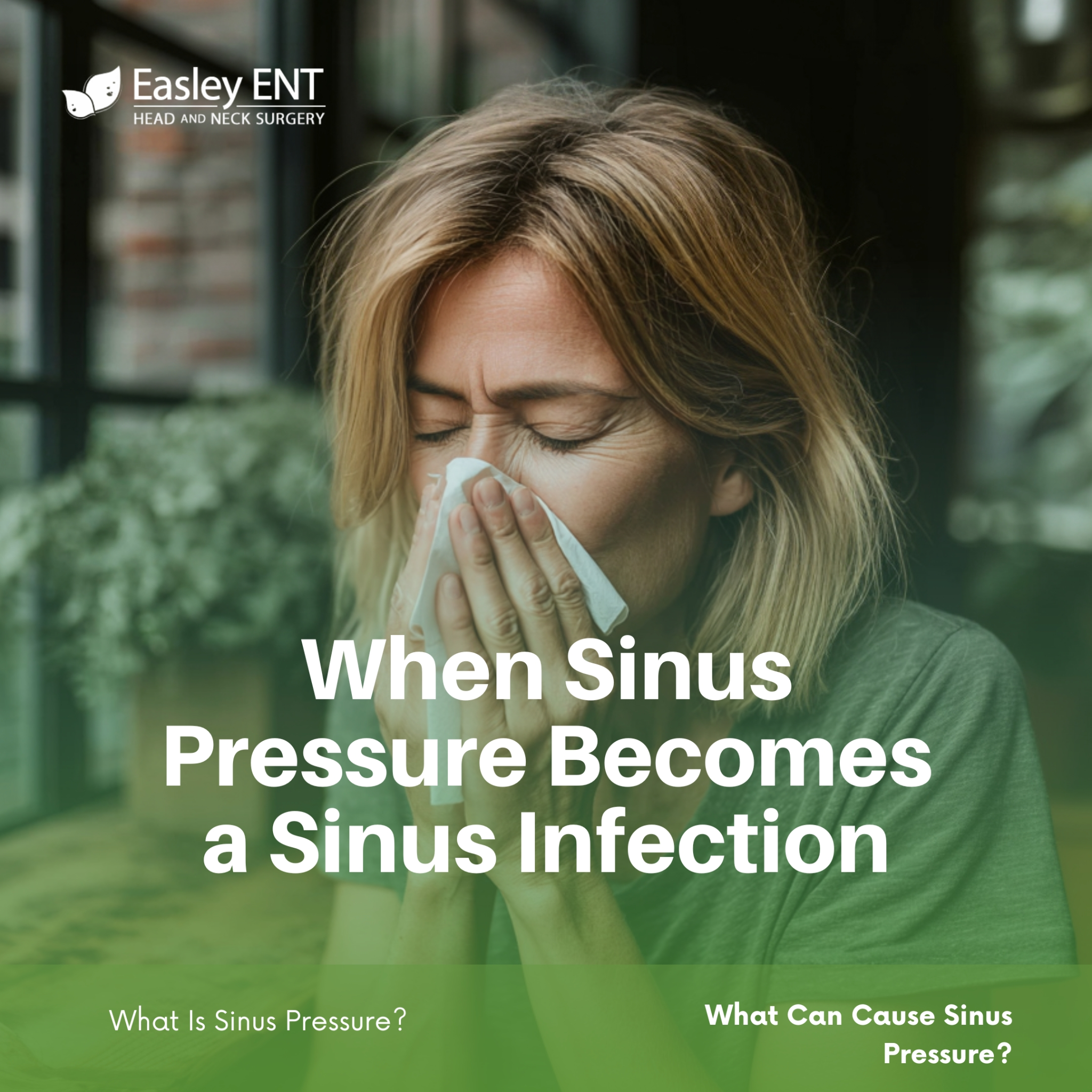
What Is Sinus Pressure?
Located behind the nose, cheeks, forehead, and eyes are hollow, air-filled spaces called the sinuses. During normal function, the sinuses naturally produce mucus to humidify the air we breathe, as well as trap and remove potential irritants in the sinus passages.
However, sometimes, the sinuses can become irritated, swollen, and inflamed. When this happens, mucus gets trapped, causing buildup, blockage, congestion, and sinus pressure.
Sinus pressure is characterized by a feeling of tightness, pressure, achiness, or pain in the face, particularly around the nose, cheeks, eyes, and forehead. Sometimes, the pressure and tightness can radiate to the nearby areas of the jaw, teeth, and scalp.
Sinus pressure often results when there is irritation, swelling, and inflammation in the tissues and membranes lining the nasal and sinus passages. When they become inflamed, mucus cannot flow and drain properly, which causes tightness or pressure in the sinus cavities and surrounding facial areas.
What Can Cause Sinus Pressure?
Sinus pressure can occur due to the swelling and inflammation of the sinus and nasal tissues. The swelling and irritation can be due to a variety of factors, including:
- Sinusitis
- Allergies
- The common cold, flu, and other viral infections
- Bacterial infections
- Nasal polyps, a deviated septum, and other structural differences within the nose and sinuses
- Air pressure fluctuations
When Is Sinus Pressure a Symptom of Sinusitis?
Sinus pressure can cause a feeling of heaviness in the head, soreness in the face, and breathing difficulties. What’s worse is that the pain can feel worse even with the slightest movement of your head.
It’s easy to connect sinus pressure to a case of sinusitis or sinus infection. However, that’s not always the case. Sinus pressure is not always a symptom of a sinus infection. Sometimes, other factors, such as allergies or the common cold, can also cause a feeling of tightness or pressure in the sinuses and face.
To determine when sinus pressure becomes a sinus infection, it's important to understand the basics of sinusitis.
What Is Sinusitis?
Sinusitis is the irritation, swelling, and inflammation of the tissues lining the sinuses and nasal passages. The sinuses (the hollow, air-filled spaces behind the nose, eyes, cheeks, and forehead) can sometimes become irritated and inflamed. This may trap mucus and cause nasal congestion, breathing difficulties, and sinus pressure, among other symptoms.
The common symptoms of sinusitis may include:
- Nasal congestion and breathing difficulties
- Postnasal drip (mucus dripping down the back of the throat)
- Runny nose with thick discharge, usually clear, green, or yellow
- Sinus or facial pressure, especially around the nose, eyes, cheeks, and forehead, which may worsen when you move or bend your head
- Headaches
- Ear pain and/or toothache
- Cough
- Halitosis (chronic bad breath) or a bad taste in the mouth
Some of the common causes of sinusitis include allergens, bacteria, viruses, and fungi. Moreover, common risk factors that may increase the risk of sinus infections include:
- Allergies
- Asthma
- A weak immune system
- Nasal polyps
- Deviated septum
- Smoking
Acute vs Chronic: The Two Main Types of Sinusitis
There are two main types of sinusitis:
- Acute sinusitis is a short-term irritation, swelling, and inflammation of the sinuses, with symptoms usually lasting for less than four weeks. Typically, this type of sinusitis may be resolved with rest, hydration, and medications.
- Chronic sinusitis is a long-term irritation, swelling, and inflammation of the sinuses, with symptoms usually persistent or recurrent, and can last for 12 weeks or longer. Chronic sinusitis may require a different treatment approach depending on symptoms, underlying causes, and clinical findings.
How Is Sinusitis Diagnosed?
Your doctor will conduct an evaluation and assessment of your sinuses, your symptoms and their severity, and your medical history to determine if your sinus pressure might be due to a sinus infection.
During the evaluation, your doctor will perform a physical exam of your nose, ears, and throat to check for any signs of swelling or inflammation that may be causing a blockage. They will also check for any tenderness or pain around the sinuses, nose, eyes, cheeks, and forehead.
If your condition requires further testing, they may recommend any of the following:
- Nasal endoscopy
- Allergy testing
- Imaging studies, such as CT scans and, in certain situations, MRI scans
- Nasal swabs
- Biopsy
How Is Sinusitis Treated?
Depending on clinical findings, test results, symptom severity, and other individual health factors, your physician will guide you toward appropriate treatment options and management strategies, which may include any of the following:
- Over-the-counter medications (such as decongestants, antihistamines, saline nasal sprays, and pain relievers)
- Allergy medications
- Immunotherapy
- Sinus rinses
- Prescription antibiotics or intranasal steroid sprays
- Balloon sinuplasty
- Septoplasty
When Should I See a Sinus Specialist in Easley, SC?
While some sinus issues may resolve on their own with rest, hydration, home remedies, and medications, consider seeing a sinus specialist in Easley, SC, for worsening symptoms or symptoms that persist longer than 10 days.
Additionally, seek immediate medical help for severe symptoms, such as:
- High fever
- Stiff neck
- Facial swelling
- Confusion
- Vision changes
Learn More About Sinus Pressure and Sinusitis With Easley ENT
Easley ENT provides ENT care services in Easley, SC, and the surrounding South Carolina communities. Get in touch with our team for more information about the available ENT services near you.
The information provided in this article is for informational and educational purposes only and does not constitute medical advice. It is not intended to diagnose, treat, cure, or prevent any disease or medical condition. Always seek the guidance of your physician or other qualified healthcare provider with any questions you may have regarding a medical condition or treatment.
Results may vary: Treatment outcomes and health experiences may differ based on individual medical history, condition severity, and response to care.
Emergency Notice: If you are experiencing a medical emergency, call 911 or seek immediate medical attention.